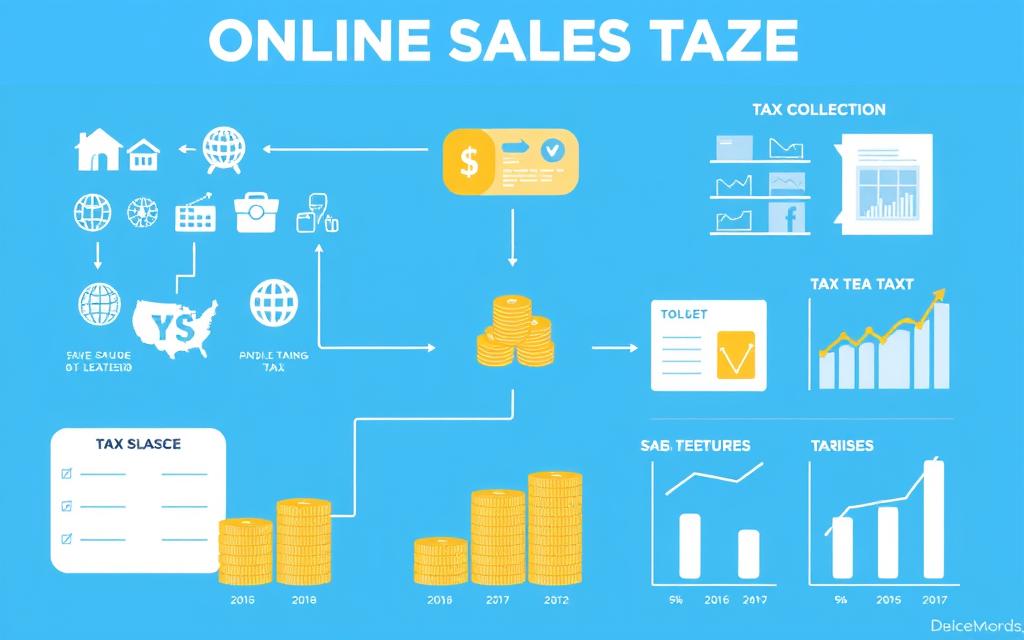
Understanding website sales taxes is key for e-commerce businesses today. Sales tax is a must, and it changes based on where your customers are. It affects every online sale, impacting your business’s rules and operations.
Not knowing about e-commerce tax rules can lead to big fines. It’s important to know your tax duties and laws well.
This article will guide you through sales tax basics. It covers state rules and how to handle your taxes. With this info, you can deal with website taxes confidently and follow local laws.

Sales tax is key in the world of e-commerce. Knowing the basics helps you deal with online taxes better. This part explains what sales tax is, why it matters, and how it’s figured out.
Sales tax is a tax that states and local governments put on goods and services sold. It helps fund public services and roads. Five states don’t have sales taxes, but most include leasing and some services.
It’s important to know the rules about internet sales tax. Each state has its own rules.
Sales tax helps pay for things like schools, roads, and safety. Businesses that follow the tax rules are seen as honest. This builds trust with customers.
Online stores like Amazon have changed things. Sellers must now follow local and state tax rules. This stops people from avoiding taxes by buying online.
Figuring out sales tax involves knowing the rates and rules of each area. Most states make the buyer pay the tax. There are three main types of sales taxes.
Each state has its own tax rate. For example, California’s rate is 7.25%. This can go up with local taxes. Remember, the tax rules can change if a seller has a presence in a state.
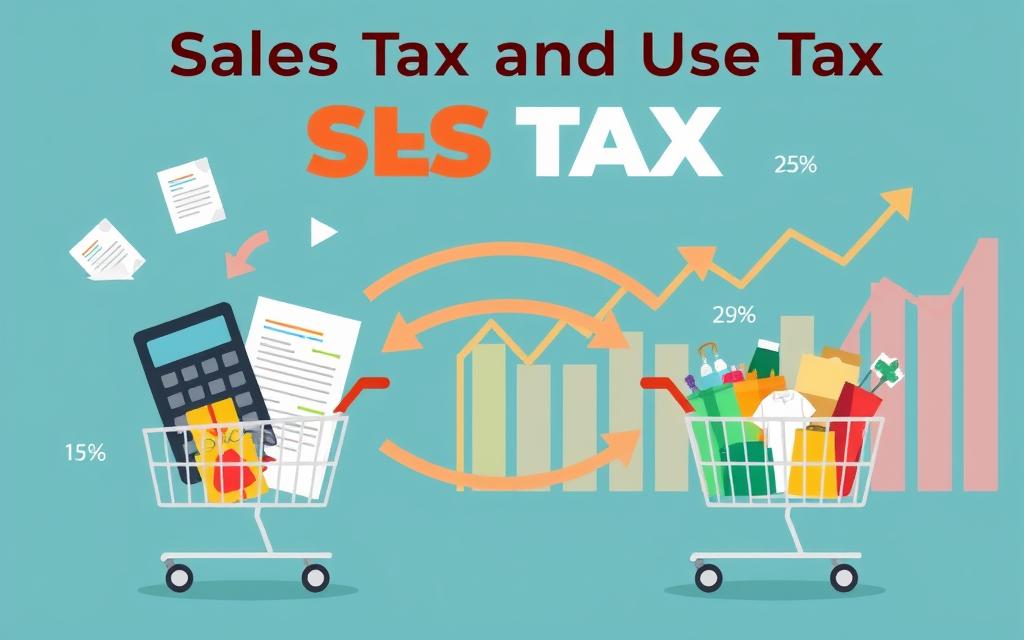
It’s important to know the difference between sales tax and use tax. Sales tax is collected when you buy something. Use tax, on the other hand, is about making sure items bought out of state also help with local taxes.
Use tax is for items you use in a state after buying them elsewhere. It’s often not as well-known as sales tax. If you buy something without sales tax or if it’s tax-exempt but you use it in a way that’s not, you need to report and pay use tax. This helps keep local businesses fair by taxing goods bought online the same as those bought locally.
Use tax applies in several situations:
Most states make the buyer, not the seller, responsible for tax compliance. This is important for online shopping, as states enforce these rules to make sure all sales are taxed right.
| Type of Tax | Who is Liable? | Application |
|---|---|---|
| Sales Tax | Seller | Collected at the point of sale |
| Use Tax | Buyer | Applicable on out-of-state purchases and items used in a taxable manner |
Understanding sales tax and use tax helps you deal with tax rules better. This is key as tax laws for digital goods keep changing with online shopping trends.
Understanding sales tax rules is key for running your online store well. Each U.S. state has its own rules, making it complex for e-commerce businesses. With forty-five states and Washington D.C. collecting sales tax, knowing the details is essential.
Businesses face the challenge of over 12,000 tax jurisdictions. Each has its own e-commerce tax guidelines.
Sales tax rules depend on where you are and how much you sell. In California, the sales tax rate is 7.25%. Businesses with over $500,000 in sales must follow specific rules.
But, states like Alaska, Delaware, Montana, New Hampshire, and Oregon don’t charge sales tax. This is a big advantage for online stores.
It’s important to know the different rules to avoid penalties. Economic nexus thresholds can change from $10,000 to $50,000. This shows the need for a smart approach to online store taxes.
States have their own rules that affect your tax needs. Selling through platforms like Amazon can mean collecting sales tax in many states. State agencies give clear rules on when you must collect sales tax.
It’s important to check these rules often.
| State | Sales Tax Rate | Economic Nexus Threshold |
|---|---|---|
| California | 7.25% | $500,000 in sales |
| New York | 4% + local taxes | $500,000 and
transactions |
| Idaho | 6% + local taxes | $100,000 in sales |
| Oregon | No sales tax | N/A |
Understanding these rules helps you stay compliant and protects your business. Getting professional advice is a good idea to make sure you follow e-commerce tax guidelines.
[embed-youtube id=”_WHEq2T530I”]
The introduction of economic nexus has changed how businesses deal with tax laws in the United States. It started with the 2018 Supreme Court ruling in South Dakota vs. Wayfair. Now, businesses might need to collect sales tax in states where they sell a lot, even without a physical presence.
Economic nexus means businesses must collect sales tax in states where they sell a lot. Right now, 46 states have laws about this. They say a business must collect sales tax if it makes over $100,000 or has 200 transactions in a year.
This change makes online sellers pay more taxes. It shows how important it is to know about online marketplace taxes.
It’s key to understand economic nexus for your business. Not following sales tax rules can cause big problems. You could face interest and penalties that are 30% of what you owe.
As you sell online, watch your sales closely. When you hit a certain sales level, states might ask you to start collecting taxes. This can be a big change for your business.
With over 11,000 tax places and 500 tax rate changes expected in 2024, keeping up is hard. Your business needs to know about different tax rates for different products and locations. Using services like Stripe Tax can help with this. It can make it easier to understand and follow tax rules in different places.
Knowing how to figure out sales tax rates is key for your online store. You must look at the rates and the rules for filing and paying these taxes. Each state has its own rules for internet sales tax, so you need to pay close attention.
Sales tax rates in the U.S. usually fall between 4% and 8%. But, these rates can change a lot depending on the state and local area. Here are some important things to remember:
When filing and paying sales tax, you need to keep accurate records of all sales and the rates you charge. Each state has its own rules for when you must start collecting sales tax. This is based on your connection to that state, known as nexus.
If you don’t follow the rules for online sales tax, you could face big penalties. These can include fines, interest, and legal trouble. The South Dakota v. Wayfair, Inc. case made it clear that online sellers must collect sales tax when they meet certain nexus thresholds.
Understanding sales tax exemptions and deductions is key to better financial management. Many items or services are tax-free in different states, like groceries, clothes, or school supplies. Knowing what’s tax-free can lower your taxes and save you money.
States have rules for what’s tax-free. Here are some common things that might be exempt:
It’s important to check your state’s rules to make sure you’re right. Getting it wrong can lead to extra taxes you don’t need to pay.
Claiming exemptions needs you to know the state laws well. Here’s how to do it:
Knowing about exemptions and how to claim them can save you a lot. It helps with planning and managing your finances better.
Managing sales tax can be tough, but the right tools and experts can help a lot. There are many online resources to keep you on track with sales tax. These tools help with tax rates, filing deadlines, and state rules. Using them regularly can make following sales tax rules easier.
Tools like Avalara and TaxJar are great for e-commerce businesses. They make handling sales tax in different states easier. For example, knowing Florida’s tax rates for certain items can prevent mistakes. These tools save time and help you follow local laws.
Online tools are a good start, but tax pros offer personalized advice. They can explain complex rules and help with filing. Knowing the rules, like nexus thresholds, is key. Getting expert help ensures your business stays compliant and grows.
Understanding website sale taxes means knowing your sales tax duties based on where customers live. Learn about state rules, the difference between sales and use tax, and economic nexus. This can change how much tax you owe.
E-commerce taxes can change your prices, profits, and tax rules. It’s key to get sales tax right, know local and state rules, and pay the right amount to avoid fines.
To find sales tax rates, use state tax sites, online tools, or tax software. This keeps your records accurate for tax filing and payments.
Sales tax is for in-state sales, while use tax is for out-of-state purchases used in your state. Knowing this helps with tax rules and compliance.
State tax rules differ a lot, with some having special rules and limits. Knowing each state’s rules is key for following the law.
Economic nexus means collecting sales tax if you meet sales or transaction counts in a state, even without a physical presence. If your sales hit certain levels, you must collect sales tax.
States exempt certain items like groceries, clothes, or educational stuff. Learn your state’s tax laws to know what’s exempt and apply these correctly.
Online tools and calculators can help with sales tax and filing. Also, talking to tax experts or CPAs can give you specific advice for complex tax rules.


With our extensive collection of elements, creating and customizing layouts becomes
second nature. Forget about coding and enjoy our themes.
 Discount of up to
