
A website purchase agreement is key when selling or transferring an online business. Knowing how to draft one is vital for clear and secure deals. This guide will help you understand how to make a detailed website acquisition agreement. It’s important for both buyers and sellers to know their rights and duties in the agreement.
In today’s digital world, buying online properties means more than just knowing what you’re getting. You also need to understand the risks and duties involved. A well-made website purchase agreement template can make the process smoother and protect both sides. This guide will give you the tools to handle this critical part of online business deals well.
When you buy a website, a purchase agreement is key. It outlines what both sides agree on. This makes sure everyone knows what’s happening, reducing chances of problems.
A website purchase agreement is like a contract for buying a website. It lists who’s buying and selling, what’s being sold, how much it costs, and how it’s transferred. This makes the sale go smoothly.
Without an agreement, things can get messy. It’s like a map that shows everyone’s roles and what’s included. It protects you from unexpected costs and ensures a clear handover.
When you buy a website, you need a solid agreement. This agreement makes sure the sale goes smoothly. It’s important for both the buyer and seller to understand these parts well.
A good website transfer agreement should have key details. These include:
These parts help everyone know what’s happening. They make sure there are no big misunderstandings.
Being open is key in any deal. Sellers share important info to make buyers feel secure. This info might be about:
Sellers also give warranties. This is to build trust and protect against future problems.
Contingencies are things that need to happen before the deal is done. In a website sale, you might see:
These parts help protect both sides. They make sure everyone knows their role in the deal.
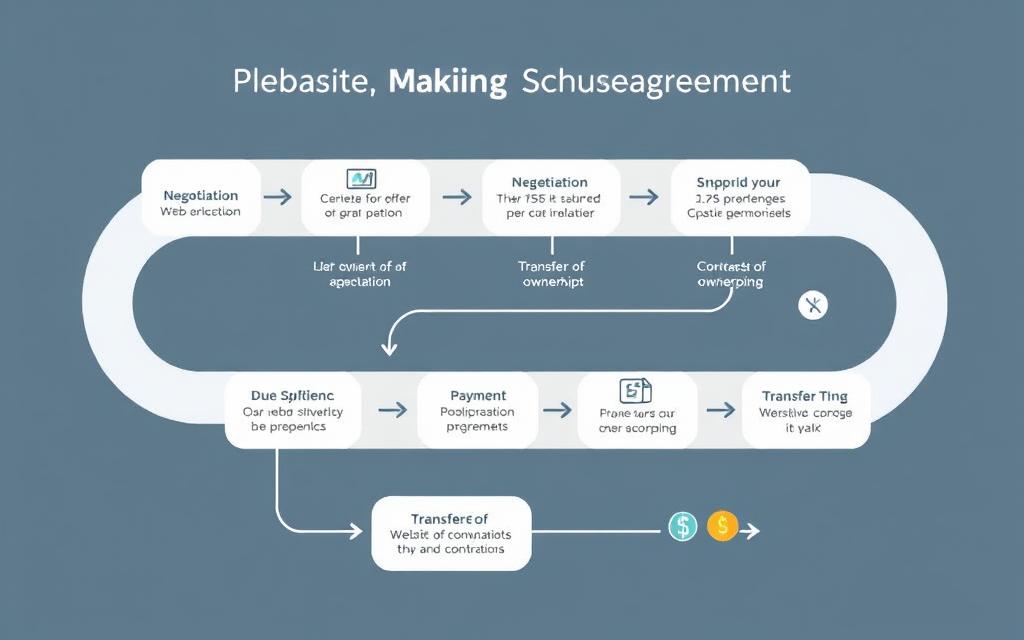
Creating a purchase agreement for websites is a detailed process. First, you need to identify all parties involved and the transaction date. You should also detail the website’s aspects, like the domain name and hosting agreements.
It’s important to clearly state the purchase price and payment terms. Make sure to specify when payments are due and the accepted methods.
Here’s a step-by-step guide to drafting a website purchase agreement:
Use simple language to make your website sale agreement clear. Avoid complex legal terms that might confuse people. Define any unclear terms to avoid future problems.
Make sure your agreement follows the laws in your area. Including more details helps. Being specific with terms and conditions helps clarify everyone’s duties. It also helps in solving any disputes that might arise.
[embed-youtube id=”4-MCo3QMPHw”]
Using a website purchase agreement template can make drafting your document easier. These templates have the basic parts already set up to meet market standards. You can find them on legal websites, contract management software, or legal document platforms.
Looking for a good website purchase agreement template? Here are some places to check:
After finding a good template, make it fit your needs. Customizing ensures your document matches your deal’s details. Focus on these areas:
Customizing your website acquisition agreement is key. It helps protect your interests and strengthens your legal position.
When you’re making a website purchase contract, watch out for common mistakes. Buyers and sellers often miss important legal parts. Knowing these mistakes can help you make a better agreement.
When you write a website purchase agreement, don’t forget the important legal parts. Things like warranties and what happens if something goes wrong are often left out. Make sure you include things like intellectual property rights, following the law, and non-disclosure agreements. This makes the agreement clear and helps the deal go smoothly.
Not being clear about the terms and conditions can lead to problems later. It’s important to list out what each side has to do. Include things like how you’ll pay, when, and what happens after the deal is done. Using unclear language can cause confusion and hurt the contract’s value.
Drafting a purchase agreement for websites is key to a smooth and safe deal. It’s more than just a piece of paper; it’s a clear guide for both sides. Using templates and knowing the important parts makes this easier, protecting your interests.
Being careful is essential, whether you’re buying or selling. Make sure to include important details like the deposit amount, any conditions, and when to inspect the property. A clear contract avoids confusion and legal issues, helping both parties.
Spending time on a good purchase agreement for websites is worth it. It makes sure everything is clear and agreed upon. This careful planning leads to smoother deals and keeps your business safe in the online world.
A website purchase agreement is a legal document. It outlines the sale or transfer of an online business or site. It protects both the buyer and the seller.
You need a website purchase agreement to legally formalize the sale. It ensures clarity in the transaction. It also protects both parties in case of disputes or misunderstandings.
A good website purchase agreement includes the names and contact info of both parties. It also has a description of the website, the purchase price, and payment terms. Disclosures and warranties, and any sale-related contingencies should be included too.
To draft a purchase agreement for a website, start by identifying the parties involved. Outline the transaction details. Clearly state the purchase price and payment terms. Include necessary disclosures and contingencies to protect both parties.
Website purchase agreement templates are available on legal websites, contract management software, or legal documentation platforms. Make sure to choose a template that fits your specific transaction needs.
To customize a website purchase agreement template, modify it to reflect your transaction’s specifics. Add necessary contingencies, disclosures, and warranties relevant to your deal.
Common mistakes include overlooking key legal elements. Failing to specify warranties or contingencies is also a mistake. Not clearly defining terms and conditions can lead to misunderstandings and disputes.


With our extensive collection of elements, creating and customizing layouts becomes
second nature. Forget about coding and enjoy our themes.
 Discount of up to
